
Report of a Harkness Centenary Discussions on Higher Education which took place on February 11th 2025
Three Harkness Fellows, Sir David Bell, Professor Karen O’Brien and Professor Sir Peter Scott led the first Harkness Centenary Discussion on the challenges and possible solutions in the higher education sector, with participants adding comments. Moderated by Sir David Bell, his is a summary of the points discussed.
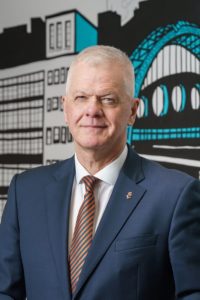
Sir David Bell
Since 2012 when the £9,000 annual fee was introduced and the maintenance system changed to one of loans a few years later, debate has raged as to the effect on both students, universities, communities and the taxpayer. Now, more than a decade later with universities struggling to maintain some courses and academics being laid off, many commentators are signalling a crisis in the sector.
Into this debate Harkness Fellows, many of whom have had successful careers both in academia and the wider world as a result of a free university education, reflected on how we got here and where we go now. Not since the Robbins report in 1963, which signalled a major expansion of universities in the UK a few years later, has the sector been at such a crossroads and this was evident in the discussion that followed.
Traditional, and somewhat antiquated notions that quality would inevitably suffer at the hands of greater accessibility were questioned by Harkness Fellows, whose experience of arriving in America to experience post-graduate university life informed their views.
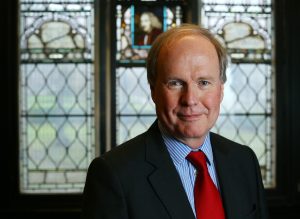
Professor Peter Scott,
Photograph by Colin Mearns
Professor Sir Peter Scott was one of those who studied this first hand, evoking economic historian and socialist RH Tawny who saw the liberalising effect that university had on American society and its people a few years previously. “They had had the smell of higher education,” he said.
But how was such a system funded? The meeting heard that while university expansion was paid for by the state in the UK (and highly centralised) prior to 1998, there was a wide diversity of funding streams in America – from endowments for many of the Ivy League institutions, to fees for those supporting lucrative liberal arts courses. In some cases there was municipal local funding. Fellows reflected on how many US students worked to subsidize their studies, and how much harder they studied than the students in the UK at the time. The funding system had also had the effect of creating a decentralised higher education system which one Fellow suggested made it more sustainable than the current UK system.
It also created a market – and this, hitherto largely unknown factor in British universities, increasingly characterised the UK model – particularly after the introduction of the original tuition fee structure. There was discussion about whether the need for a university ‘brand’ was leading to some homogenisation and the extension of franchising.
The marketisation of universities had undoubtedly brought benefits initially with more money coming in to fund further expansion of the sector. But by 2024 – 12 years after the £9000 tuition fee cap was introduced – the lack of inflationary uplifts, together with visa restrictions on foreign students (and their families) and other pressures on the public purse, the sector was in trouble. Relying on international student income in recent years had been a ‘precarious model’.
The current system was, summarised Professor Sir Scott, a “lose, lose, lose” in which students become indebted, universities suffer losses and taxpayers continue to make substantial contributions to what the political classes increasingly saw as a sector benefiting from private income. This led many politicians to believe that higher education did not need support. He noted that most EU Universities are funded or heavily subsidised by the state and he advocated that approach, noting that not all the answers necessarily came from America.
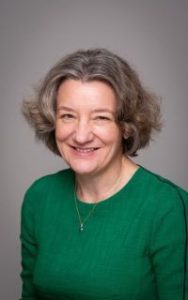
Professor Karen O’Brien
But Professor Karen O’Brien, who said colleagues often referred to the situation as a “triangle of sadness”, felt that this was unrealistic in the current economic and political climate. She highlighted the impact on students of the change from maintenance grants to loans, with many Universities setting up bursary systems to support students with the high cost of living. She saw cause for optimism in the existing structures and felt that the loan system could be adapted. She noted that students could pay back their loans over 40 years, although noted that students in most OECD countries cover on average 30 per cent of the costs in higher education. In England it was about 70 per cent. She said that we should be looking into the fairness of repayments after graduation as some who might benefit from university were deterred; conversation about a graduate tax came up but it was too late for further discussion.
The benefits of university were clear and this was reflected in the fact that half of under 30s now went into higher education in the UK. Peter highlighted that there was strong demand, with many who had not attended university wanting it for their children. Another participant raised the question of early experience of the workplace being more valuable than a degree, though Karen reminded the group that graduates earn more, have better health and better life outcomes.
The leadership of universities in developing civic society was central to a number of contributions. In an age of uncertainty, universities had hugely positive influences to bring on democracies – and in how they related to non-democracies. Political polarisation, the erosion in public trust in institutions all meant universities had an active role to play in civil society. Fellows noted the importance of universities as being places for “debate, education and thought where people can engage in real thinking”; where students could learn about climate change and other key issues for our times, whatever they study. The trend for ‘no-platforming’ caused concern.
“We must remain credible and valuable to those young people we serve,” Professor O’Brien commented on the issue of students as customers, raised by some participants. Students see themselves as investing in their future. The fee system had given students the chance to speak up, have redress and recourse, something many of the participants did not have as students. She noted that students were often looking for social uplift (better careers and income), psychological uplift (confidence, networks, support) and greater awareness in planetary terms. It was important not to overdramatise what marketisation did to the relationships between students and their teachers and universities.
The polarisation in society may be reflected at the ballot box. Although disputed by some, the “diploma divide” in which people with university degrees tend to vote for one party, and those without – another, was seen in action in President Trump’s election and the Brexit vote. Low progression to university in some areas of England were also cause for concern, she said.
A number of other issues were raised. One Fellow noted that universities were not subject to the same political pressures that many other British institutions were, and this meant that they could look to the long-term rather than to the lifetime of a government, providing leadership in society. The importance of teaching students about environmental challenges also came up. Another Fellow said that he had been disappointed to hear reports that “wokeism” and the rejection of free speech was present in some universities while another said he would welcome a debate about how universities might build a better society in future. “If universities don’t do it, where will it come from,” he said.
Sir David Bell asked Professor O’Brien and Professor Sir Peter Scott to sum up what had been a wide-ranging meeting with ‘some reasons to be cheerful’. Professor O’Brien said that the UK continues to do the “most extraordinary” research in medicine, engineering and her own subject area, the humanities and that it is still playing an important role in the global system of universities for the betterment of mankind, with significant impact on individual students’ lives. Professor Sir Scott said that UK universities were still worldclass and that some of the most successful economies in the world had higher university participation rates. We just needed to hold faith.
The Harkness Fellows Association thanked the moderator Sir David Bell, the contributors Professors O’Brien and Scott, and all participants for a very interesting discussion.
Biographies
Sir David Bell KCB DL (HF 1993-94) is Vice-Chancellor and Chief Executive of the University of Sunderland. Previously, he was Vice-Chancellor at the University of Reading and, before that, Permanent Secretary at the Department for Education and Her Majesty’s Chief Inspector of Schools. He is also Chair of Karbon Homes, a social housing provider.
Professor Karen O’Brien (HF 1989-91) joined Durham University as its Vice-Chancellor and Warden in 2022. She originally studied English at University College, Oxford and gained a BA and then an Oxford D.Phil focused on the history of ideas in the eighteenth century. She held her Harkness Fellowship at the University of Pennsylvania in 1989-90. Thereafter she held academic positions at Cambridge, Cardiff and Warwick. She was Vice-Principal (Education) at King’s College London and Head of Humanities at Oxford before moving into her current role.
Professor Sir Peter Scott (HF 1973-74) is emeritus Professor of Higher Education Studies at University College London. Previously he was Vice-Chancellor of Kingston University (1998-2010) and before that Pro-Vice-Chancellor and Professor of Education at the University of Leeds, and Editor of ‘The Times Higher Education Supplement’. From 2011 to 2015 he was Chair of the Council at the University of Gloucestershire, and from 2016 to 2022 the first Commissioner for Fair Access in Scotland. He is a member of the Academy of Social Sciences and the Academia Europaea.
Report prepared by Nick Pearson of Pearson and Pearson (communications) Ltd