
Report of a Harkness Centenary Discussions on the UK water industry which took place on March 11th 2025
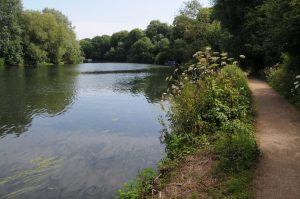
River Thames and Thames Path
By Phillip Halling
Harkness Fellow, Evan Davis, as moderator, supported by contributions from Baroness Barbara Young and Colin Drummond OBE DL, led the second of a series of Harkness Centenary Discussions on the challenges that the UK water industry faces. Guests from the Water Conservators were present. This is a summary of the points discussed.
Former Undertones frontman and now clean water campaigner Fergal Sharkey loomed large in what was a wide-ranging and well-informed debate about the water industry. It wasn’t so much that the singer, made famous in the 1970s with hits such as Teenage Kicks and Jimmy Jimmy, had become the face of the water debate in the public mind but that he had so successfully turned the debate around water into one of river quality – squeezing other, perhaps, more pressing issues in the industry to the margins.
As one Fellow said: “No one is going to die of not swimming, but they will if without enough fresh water.”
And it was this sense that somehow in all the media coverage there had been since privatisation by the Conservative Government in the 1990s, the real story of the water industry had become lost. Mr Sharkey with the help of the tabloid press was on a narrow track. His view was that essentially the public had paid for investment over the years but it had gone instead to shareholders and therefore the task was now to tell the companies they had to invest without charging consumers any more money. This wasn’t only the view of the media, it was also a more general view with many members of the public feeling the same.
And yet, there were lots of reasons to think that the view was a little too simplistic, said Evan inviting Colin Drummond, Harkness Fellow, former Pennon Group PLC board member and Master of the Worshipful Company of Water Conservators in 2007 and 2022, to provide some historical context.
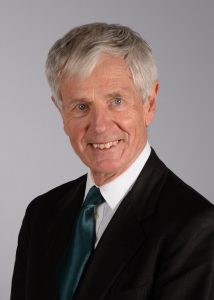 Colin said that in the 1990s the country faced a relatively limited problem with a moderate clean up bill when compared to the present situation.. Two pieces of European legislation, the Urban Wastewater Directive and the Bathing Water Directive, fired the Thatcher Government into action with £2-3 billion being needed annually for investment. This had brought private finance into the water industry and the meeting heard later that there were ‘good things’ that came as a result. But to keep bills down, the need for work on combined sewer overflows, where water from road drainage and from toilets and sewage goes through the same system in the event of a storm, was ‘fudged’.
There had also been immense change in the years since privitisation : for example, the country’s population had increased by 19 percent (30 per cent in London and the SE alone) and we’d also concreted over a lot of land. Climate change impact had become more severe and there had been a failure to invest in new reservoirs to the extent that there was now an acute shortage in water in the South East.
An era of cheap debt then followed which saw some companies using this to reduce the cost of capital for their organisations – and while this worked up to a certain level, too much forced capital cost upwards and was unsustainable. Further, stricter environmental regulations followed in the years after the 1990s and public expectation of what rivers were for changed – they were no longer seen as mainly drains. All this meant that the capital expenditure needed was now £20 billion annually for the next 5 years with a total of perhaps £600 billion needing to be spent on the water industry and associated matters up to 2050.
An independent commission had been set up to look at where we go from here but before we decide what to do with the various water regulators, companies and other players,, there was a need for a debate about what the overall strategy for water is. There were , he said, ‘good people’ trying to do their best in the industry, in the Environment Agency, OFWAT and in Parliament but the issue had become much, much bigger and we have to decide what our priorities are as a country; this should determine the appropriate industry and regulatory structure and set the mandate for the various companies and regulators.
In response to a question on debt from Evan Davis, Colin said companies did the right thing by limiting debt to what made sense for their business in the long term; however some took on totally unsustainable levels of debt and they were now getting what he said was their “comeuppance”. Evan Davis thanked Colin, adding that he was grateful him for mentioning population growth as he had a theory that the country had taken all the benefits of this (tax revenue etc…) without properly investing in services.
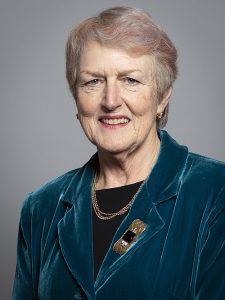 Baroness Young, current chair of Labour’s climate and environmental forum and formerly of the RSPB, Environment Agency and other relevant organisations, echoed Colin’s view that there was some hope when water was privatised. There had been underinvestment in environmental standards under the state water board system and sure enough some things improved on the environmental side. But regulation failed to keep water companies in order and some of them behaved ‘exceptionally badly’.
She said a big share of blame was on OFWAT who lost focus because they were fixated on creating competition in a monopolistic system. Nor did they take responsibility for ensuring governance of the companies was in the public interest. Sales of water companies to those outside the UK didn’t always work either as some knew about water, other didn’t or were just a “bunch of bankers”. And this both undermined the companies and drained away dividends. “The bottom line become more important than the delivery,” she said.
Over the years, they lost staff. Signals from Government were that they were less interested in environmental delivery and all this led to a perfect storm with Fergal Sharkey, the Daily Mail and even the Duke of Wellington taking aim on the state of our rivers.
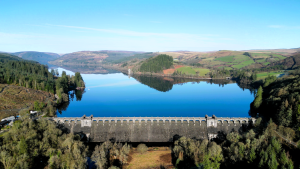
Aerial Image of Llyn Efyrnwy (lake Vyrnwy) in November 2022, built in the 1880s
But this had meant that the ‘sewage thing’ had taken over pressing issues such as having enough drinking water, stopping over abstracting, agricultural and roadside run off, emergence of highly toxic chemicals and reducing flooding and sewage overflow. These issues needed bringing back into the public debate because if all the money was focussed on improving combined sewer overflows then it would create problems in other areas.
Baroness Young proposed a number of solutions, including giving water companies a “differential kicking” depending on how they have behaved; funding the environmental regulators to be proper watchdogs; being pragmatic about what system of ownership we could live with; and having a public debate to redress the Daily Mail/Fergal Sharkey narrative that sewage overflows were the major priority.
The discussion was then opened up to the floor. One Fellow said he was present at the EU Council of Members when the Bathing Water Directive was being introduced and talked about the good old days of EU membership when an ordinary citizen could complain and the country would be brought to task at the European Courts of Justice. He said now was the time to encourage the UK Prime Minister to rejoin the European Environment Agency and associated forums – and questioned why houses being built in 21st Century New Towns could not be made to separate out waste and drinking water.
Another said that it was important that the country focussed on the result it wanted and how to get there. Were we using ISO global standards to apply any new regulations and help to ensure that agencies could meet the requirements? This was a point that another guest was able to provide assurance on; he said this had been taken up by the Water Conservators who were lobbying hard.
One Fellow wanted to be clear about where our water quality stood in relation to other countries, adding that the Thames Water CEO had not helped engender public trust with a salary of £850,000. This was a point picked up by Evan Davis who said that trust was at the heart of the issue; did the companies work in the interests of the public or themselves? And the perceived damage is that it now made it difficult for them to give more money to the same companies. It was an hypothesis not an assertion, he added. The next Fellow addressed this directly, suggesting that the UK might follow a German model in which a hybrid supervisory board made up of members of the public, environmental organisations and consumers, might oversee the operation of water companies. But a Fellow living in Wales warned against seeing the problem as one of public sector good, private bad. The Welsh system is not-for-profit, she said, and we have the same problems. She added that she thought water was a bellwether issue between the Government and its people.
One participant who had run a water company said that the debates had been similar going back as far as 1973. He argued that the current system was fundamentally right but after 35 years it was time to look again as there had been constant tweaks and it needed to be cleaned up. As a member of the Conservators, he said they would be making a case to the independent commission that the system needed to be much simpler with a direct line of sight between the financing and operations of the companies. He said what was needed now was quiet evidence-based thinking because things were not as bad as was being made out. Water needed representing in the country’s industrial strategy and more made of it in planning policy frameworks.
Another fellow said he did not want to let water companies or the Environment Agency off the hook. There was a problem in the River Wye with chicken waste which had to be tackled. He also questioned whether new housing could provide some answers, collecting rain water from roofs to prevent it reaching the sewers. It would be wonderful if we found out water butts could be the solution, Evan Davis said. The last contribution from the floor was from a Fellow who grew up in Cape Town, South Africa. He said there, they introduced a progressive system of charging. “If you use more you should pay more. We spend more on our mobiles than we do on water and we need a broader debate about the costs.”

Evan Davies
Courtesy of BBC
Before handing over to the Baroness and Colin Drummond to sum up, Evan Davis said that he hadn’t realised that the media had “overdone the sewage issue” and that they needed to balance this up. He would be taking this back to discuss with BBC colleagues.
Colin Drummond thanked everyone for the “phenomenal and amazing” discussion. He said that it was clear that there had been some bad players in water but a lot of people were trying to do the right thing. “We have swept problems under the carpet for 30 years,” he said. “We have focussed on keeping prices low, led by government decisions, and haven’t been open with the public. We need to look at the strategic priorities, get that out there and when people see the reality of the situation we can come up with proper regulations and mechanisms for delivering the right answer.”
Baroness Young said it was important that the new builds on their way made efficient use of water and that mandatory sustainable urban draining legislation should be enacted (after 13 years). A open and honest debate was needed based on evidence and the various competing priorities, with enhanced regulation and a review of company structures.
Harkness Fellows Association Chair, Judy Hargadon, thanked everyone for a great discussion and the meeting closed
Biographies
Evan Davis (HF 1986 to 88, Harvard Kennedy School) is a leading broadcaster and economist. He has held a series of senior roles with the BBC since 1993, first as economics correspondent/editor; then as presenter of Radio 4’s Today programme (2008 to 2014), of Newsnight (2014 to 2018), and of Radio 4’s PM (2018 – the present). He has also presented Dragons’ Den since 2005 and The Bottom Line since 2006. Prior to joining BBC he worked for the Institute of Fiscal Studies and London Business School. His published books include Public Spending, Made in Britain, and Post Truth.
Colin Drummond OBE DL (HF 1975 to 77, Harvard Business School) worked for the Bank of England and The Boston Consulting Group before becoming a Director of Renold plc and Chief Executive of Coats Viyella Yarns. Joining the board of water company Pennon Group plc in 1992, he created Viridor, the £4bn recycling and renewable energy company which he ran up until his retirement in 2014. He also chaired several government water and environment advisory committees. After retirement from Viridor he served as chair of Somerset NHS Foundation Trust (2014 to 2024) and as Pro-Chancellor and Chair of the University of Plymouth (2016 to 2022). He was Master of the Worshipful Company of Water Conservators in 2007/08 and again in 2022/23.
Barbara, Baroness Young of Old Scone, is a Member of the House of Lords with special interests, among others, in the environment, agriculture, land use, planning, natural resources and climate change, and current Chair of the Labour Climate and Environment Forum. She has a range of voluntary positions including the South Georgia Heritage Trust, Chartered Institute of Environmental Management, RSPB, Bird Life International and Flora and Fauna International. She has held a variety of environmental leadership roles, including Chief Executive of RSPB and the Environment Agency, Chair of English Nature and the Woodland Trust. She is a Commissioner of the Commission on Food Farming and the Countryside.
Report prepared by Nick Pearson of Pearson and Pearson (communications) Ltd
Photo of Reservoir is licensed under the Creative Commons Attribution-Share Alike 4.0 International license.